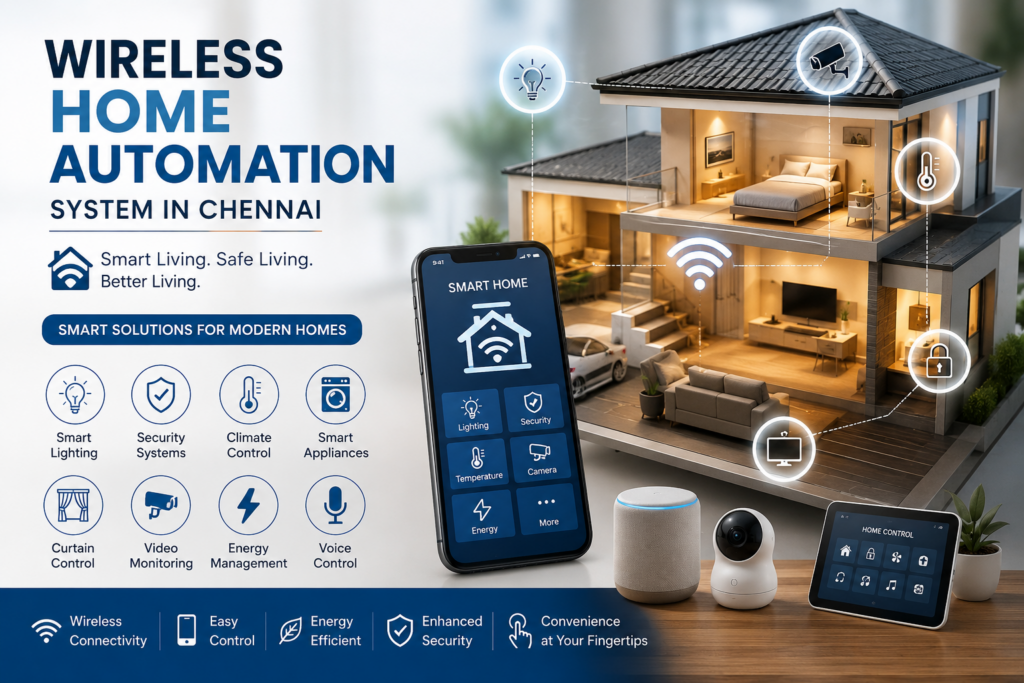
Wireless home automation has revolutionised the way that many people live nowadays, making their homes smart, safe and energy efficient. Automation is coffee-easy, like being able to control lights or appliances from a distance and control security systems and ambient temperature with a tap. The perks, however, come with a price tag, and if not planned or set up correctly, your dream smart home can very easily become a phenomenal frustration. Homeowners are often prone to buying wireless home automation projects; they aren’t aware of what they need, how they work and their future performance. This frequently results in wasted expense, sub-optimal performance and security issues.
Let’s dive into this blog to explore the common mistakes to avoid when installing a wireless home automation systems in Chennai and learn about the pro tips for long-term performance.
“A smart home works best when every device is planned, connected, and installed with purpose.”
Before purchasing devices or setting up a system, it is important to understand that home automation is more than just connecting gadgets. A successful smart home startup requires strategic planning, strong network infrastructure, device compatibility and future scalability. Without the proper preparation, you may end up with disconnected systems, weak wireless signals, or devices that fail to communicate effectively. By avoiding key installation mistakes, you can create a seamless automation system that truly enhances your lifestyle.
One of the biggest mistakes homeowners make is assuming their existing Wi-Fi network is strong enough to handle and support multiple smart devices. Wireless automation systems rely heavily on stable internet connectivity. If your Wi-Fi signal is weak in certain areas of your home, devices may disconnect frequently, respond slowly or fail entirely. A reliable network is the foundation of any successful wireless home automation system.
How to Avoid It:
Another major mistake people make is choosing devices without checking their compatibility because not all smart devices work together. Purchasing a product from different brands without verifying its compatibility can create major integration issues. Selecting compatible products ensures smooth communication and centralised control.
How to Avoid It:
Smart homes are connected homes, which means cybersecurity is crucial. Numerous homeowners fail to make a security configuration, exposing their home systems to hacking. Old firmware, poor passwords, or devices that are susceptible may put personal details at risk and be a point of entry for burglars. Poor passwords, outdated firmware, or vulnerable devices can put personal information at risk and become entry points for burglars. Installing an automation system is not the end of the job; it is essential to ensure its safety.
How to Avoid It:
When you’re ready to make your home smarter, it can be easy to wire everything into automation right away, but this can create too much confusion and complexity. Users become overwhelmed with the saturation of deployment, may have problems handling troubleshooting, and higher maintenance costs for too many devices deployed at once. Phased approaches facilitate a smoother integration and better user experience.
How to Avoid It:
Strategic placement of wireless sensors, cameras, smart locks and automation hubs is key to get right. A good placement can cause weak signals, false signals or the loss of efficiency. Reliability of the system is greatly enhanced when proper placement is used.
Common Placement Errors:
How to Avoid It:
People install systems based on their current needs without paying attention to the future of the building and what they might expect. Technology will change, so maybe you want to upgrade with smart blinds, irrigation systems, advanced security or energy systems. Investing in the long-term eliminates the need for expensive replacements later on.
How to Avoid It:
Some wireless products are simple to install and set up, whereas a larger automation system may require expert planning and setup. An expert can save you time, money and frustration.
If you make mistakes while doing any of this yourself, it can result in:
How to Avoid It:
Organise Your Smart Devices: Group and name devices appropriately for easy control.
Pick energy-saving automation products: Utilise intelligent equipment to lower energy usage and costs.
Create Customised Automation Schedules: Make your own schedules to fit your lifestyle.
Run your system tests routinely: Regularly test the devices to make sure they operate correctly.
Invest in Quality Devices: Opt for trusted products for increased durability and connectivity.
Provide backup power to critical devices: Use power backups for important smart systems.
Ensure mobile Apps are kept current: Keep apps latest for greater security and features.
Educate Family Members on How to Use the System: Assist everyone in understanding the functioning of the system.
Avoid Overloading One Network: Control connected devices to ensure network speed.
Collaborate with Expert Automation Specialists: Proper professional instructions lead to a better automation setting.
Better Performance: Ensures smooth and reliable device operation.
Better Security: Guards your smart home and its technology from cyber threats.
Easy Automation: Simplifies and makes automation easy and convenient.
Reduced Maintenance Costs: Decreases the need for frequent repairs and troubleshooting.
Faster Device Response: Improves the speed and efficiency of smart systems.
Energy Savings: Saves unnecessary power use.
Easy Future Expansion: Allows simple upgrades and additional features.
Longer Device Lifespan: Increases the durability of automation products.
Greater Comfort: Enhances convenience in everyday living.
More User-Friendly: Provides a more efficient, harmonious and seamless home experience.
Wireless home automation systems in Chennai offer incredible advantages, but only when they are installed thoughtfully. Rushing the process, ignoring compatibility, neglecting security, or underestimating network needs can lead to expensive problems. By avoiding these seven common mistakes, homeowners can create smarter, safer and more efficient living environments that are built for both present comfort and future growth. Investing time in proper planning today ensures your smart home remains reliable, secure, and adaptable for years to come. Whether you are automating a small apartment or a large family home, making informed decisions is the key to unlocking the full potential of wireless home automation.
Looking for Home Automation Systems in Chennai? Our Infex Automation is known to be best Home Automation Company in Chennai provide top Home Automation in Chennai. We are well known for Smart Home Automation, Smart Gate Automation, Wired Home Automation, Wireless Smart Home Automation, Curtain Automation, CCTV and Security Systems, Digital Door Lock Automation, Video Door Phone Installation Services, OTS Automation, Audio Visual Solution Providers in Chennai..
Copyright © 2025 Powered by Infex Automation . Design and Developed by